
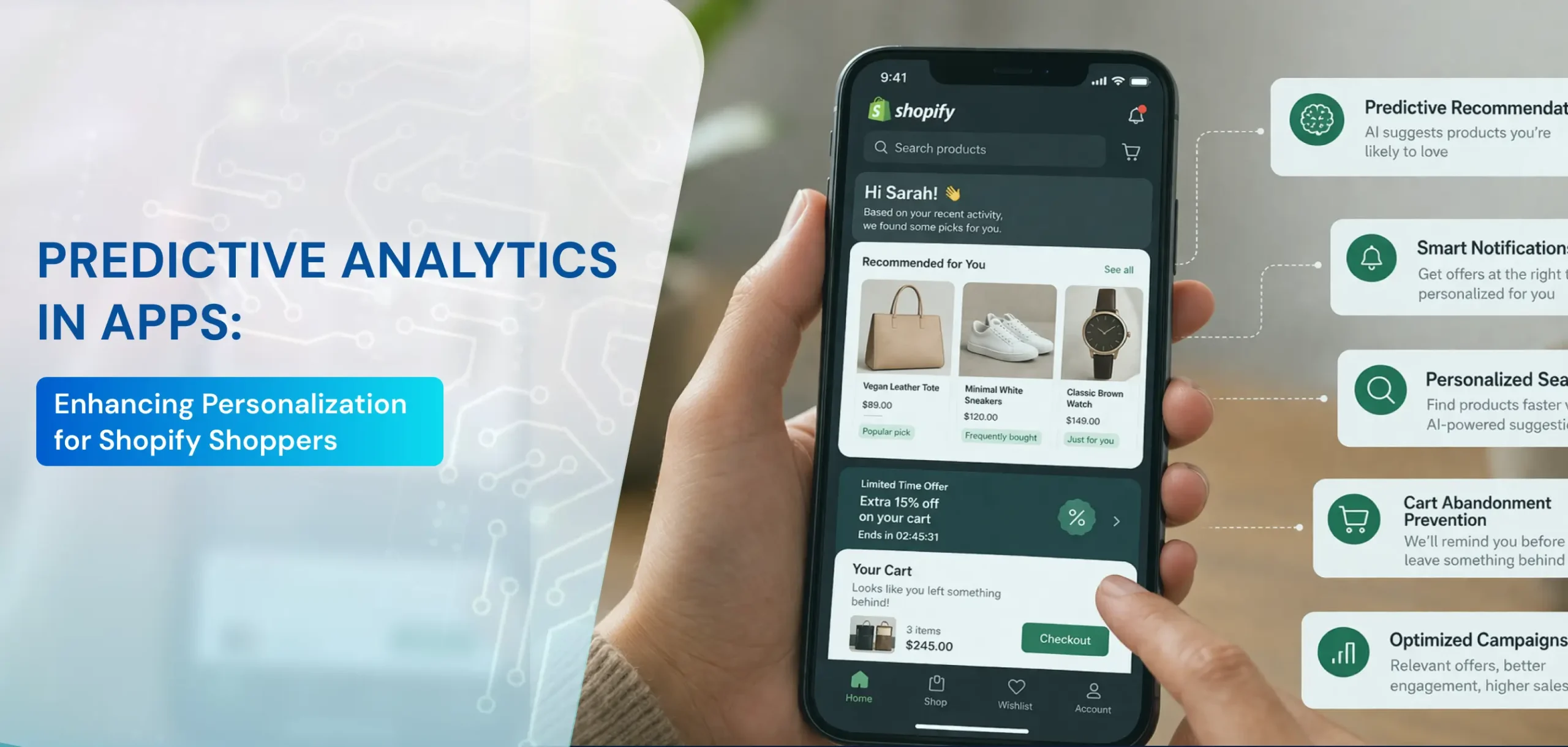
In the competitive world of e-commerce, personalization has become a key driver of sales and customer loyalty. Shoppers expect relevant product recommendations, timely offers, and seamless experiences tailored to their preferences. Predictive analytics in mobile apps empowers Shopify store owners to anticipate user behavior, deliver personalized experiences, and increase conversions.
This blog explores how predictive analytics can enhance personalization in Shopify apps, the strategies for implementation, and the benefits for e-commerce businesses in 2025.
What is Predictive Analytics in E-commerce Apps?
Predictive analytics refers to the use of data, statistical algorithms, and machine learning to forecast future user behavior. In the context of e-commerce apps, it can help predict:
- What products a customer is likely to purchase next
- The best time to send push notifications or promotions
- Likelihood of cart abandonment or churn
- Personalized pricing, offers, or recommendations
By analyzing historical behavior, browsing patterns, and purchase history, predictive analytics allows Shopify apps to deliver real-time, relevant experiences that drive engagement and sales.
Why Predictive Analytics Matters for Shopify Shoppers
Personalization is no longer optional customers expect it. Predictive analytics benefits Shopify stores by:
- Increasing conversions: Relevant recommendations and timely offers encourage purchases
- Reducing cart abandonment: Anticipating user behavior allows proactive engagement
- Boosting customer loyalty: Personalized experiences strengthen brand relationships
- Optimizing marketing efforts: Send targeted campaigns to the right users at the right time
For mobile apps, predictive analytics enhances UX, engagement, and revenue, making it an essential tool for e-commerce brands.
1. Collect and Analyze User Data
The foundation of predictive analytics is accurate and comprehensive data:
- Behavioral data: Track browsing history, search queries, clicks, and scroll patterns
- Transactional data: Capture past purchases, cart activity, and payment methods
- Demographic data: Use age, location, and preferences to segment users
- Engagement data: Monitor push notifications, email opens, and in-app activity
By collecting and analyzing this data, Shopify apps can anticipate user needs and preferences, providing personalized experiences at scale.
2. Implement Machine Learning Models
Machine learning algorithms are at the heart of predictive analytics. Key approaches include:
- Recommendation engines: Suggest products based on user behavior and similarity to other shoppers
- Churn prediction models: Identify users likely to abandon the app or cart
- Behavioral segmentation: Group users based on interests, activity, and purchase patterns
- Dynamic pricing models: Optimize discounts and promotions for individual users
Integrating these models into Shopify apps allows brands to deliver timely, relevant, and personalized content.
3. Personalized Product Recommendations
Predictive analytics enables Shopify apps to provide dynamic product recommendations:
- Show related products on product detail pages
- Suggest complementary items during checkout
- Offer personalized deals based on past purchases
- Adjust recommendations in real-time based on in-app behavior
Effective personalization increases average order value, repeat purchases, and overall revenue.
4. Smart Push Notifications
Push notifications can engage users when used thoughtfully. Predictive analytics enhances this by:
- Sending notifications at optimal times when users are most likely to engage
- Offering personalized discounts or promotions based on user history
- Reducing irrelevant messages that lead to app uninstalls
- Re-engaging users likely to abandon carts
Predictive notifications improve click-through rates, retention, and conversions on Shopify apps.
5. Personalized Search and Discovery
Search functionality is critical in mobile commerce. Predictive analytics can enhance search by:
- Autocomplete suggestions based on past searches
- Prioritizing results based on user preferences
- Highlighting trending products relevant to each shopper
- Offering AI-powered filters that adapt to user behavior
Enhanced search and discovery reduce friction and help users find products faster, improving the overall shopping experience.
6. Reduce Cart Abandonment with Predictive Insights
Cart abandonment is a major challenge for e-commerce apps. Predictive analytics helps:
- Identify users likely to abandon their carts
- Trigger targeted reminders or special offers
- Personalize exit-intent messages to retain shoppers
- Optimize checkout flow based on predicted user behavior
By addressing cart abandonment proactively, Shopify apps recover lost sales and improve conversion rates.
7. Optimize In-App Marketing Campaigns
Predictive analytics allows Shopify apps to tailor marketing campaigns for maximum impact:
- Segment users based on predicted interests or purchase likelihood
- Schedule campaigns when users are most likely to engage
- Offer personalized promotions, discounts, or loyalty rewards
- Track campaign effectiveness and continuously refine targeting
Data-driven marketing ensures higher ROI and better engagement for Shopify brands.
8. Enhance Customer Loyalty Programs
Predictive analytics can make loyalty programs more effective by:
- Identifying high-value customers and rewarding them with personalized perks
- Suggesting incentives for users likely to churn
- Tailoring points, rewards, and offers based on purchase behavior and preferences
- Encouraging repeat purchases through timely recommendations
Well-optimized loyalty programs increase retention and lifetime customer value.
9. Monitor and Refine Predictive Models
Continuous monitoring and refinement are critical for predictive analytics:
- Track performance metrics like click-through rate, conversions, and user engagement
- Update models based on new data and changing user behavior
- Test and iterate features to improve accuracy and personalization
- Ensure predictive insights remain aligned with business goals
Regular optimization ensures Shopify apps deliver consistent, high-quality personalized experiences.
10. Future Trends in Predictive Analytics for Shopify Apps
Looking ahead, predictive analytics in e-commerce apps is evolving rapidly:
- On-device AI for real-time personalization and enhanced privacy
- Voice-assisted shopping using predictive insights for product suggestions
- Integration with AR/VR experiences for immersive, personalized shopping
- Self-learning apps that continuously refine recommendations based on interactions
Embracing these trends enables Shopify brands to stay ahead of the competition and delight shoppers with cutting-edge personalization.
Predictive analytics is transforming how Shopify stores personalize mobile shopping experiences. By leveraging user data, AI models, and machine learning algorithms, apps can anticipate customer needs, deliver relevant product recommendations, optimize marketing campaigns, and reduce cart abandonment.
For Shopify store owners, implementing predictive analytics means higher engagement, increased conversions, and stronger customer loyalty.
At Gradient Eye Technologies, we specialize in AI-powered app development, predictive analytics integration, and Shopify mobile optimization, helping e-commerce brands create personalized, data-driven, and high-performing apps that enhance the shopping experience and drive revenue growth.