

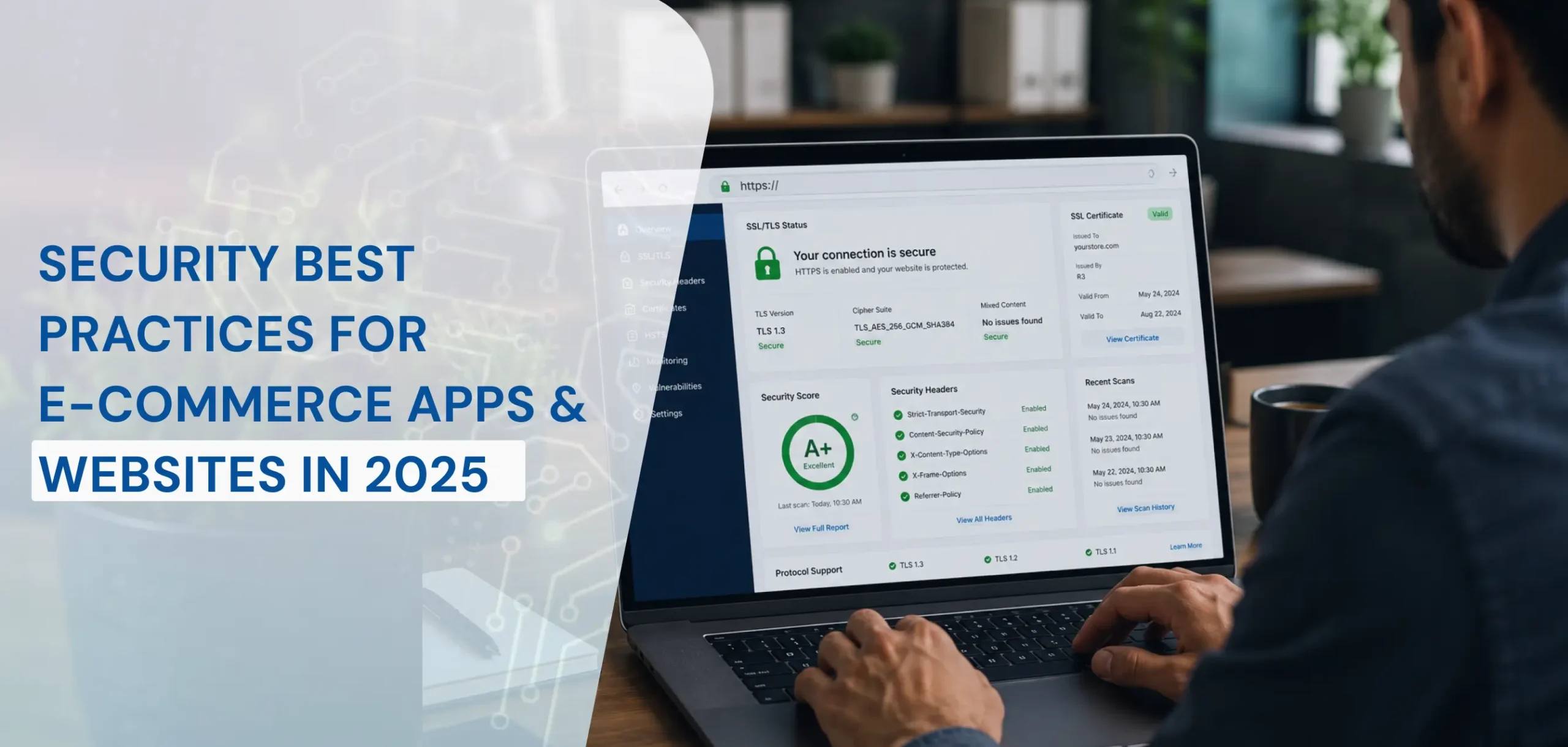
As e-commerce continues to grow, the stakes for online business security have never been higher. Every day, online stores handle sensitive customer information, process financial transactions, and manage digital assets that hackers target relentlessly. In 2025, keeping your e-commerce website and apps secure is not just a technical necessity, it’s a business imperative. A security breach can lead to financial loss, damage to brand reputation, and legal complications under regulations like GDPR and PCI DSS.
In this guide, we outline proven security strategies for e-commerce platforms, focusing on proactive measures to safeguard your online store, improve trust, and maintain seamless operations.
Why Security Matters for Online Stores in 2025
E-commerce businesses face unique challenges compared to traditional websites. Hackers often target webshops due to the high volume of financial transactions and sensitive customer data. Without strong security practices, online stores risk:
- Unauthorized access to payment information
- Data breaches exposing personal customer details
- Loss of customer trust and decline in sales
- Regulatory penalties for failing to protect sensitive data
For any online business, proactively protecting your digital storefront is essential to maintain credibility and operational continuity.
1. Use HTTPS and SSL for Secure Connections
One of the most basic yet crucial steps is to ensure all communication between your users and your website is encrypted. Implementing HTTPS and SSL certificates safeguards customer data, including login credentials and payment information.
- Install SSL certificates across your entire website, not just the checkout page
- Enable HTTP Strict Transport Security (HSTS) to prevent security downgrades
- Regularly renew certificates to avoid browser warnings and potential trust issues
For Shopify stores, SSL certificates are included by default, but it’s important to ensure that all third-party apps and custom pages are also secured with HTTPS.
2. Keep Your Platform and Apps Updated
Outdated software is a major security risk. Hackers often exploit vulnerabilities in old versions of e-commerce platforms, plugins, or apps.
- Regularly update your platform, whether it’s Shopify, WooCommerce, or Magento
- Apply patches for themes and third-party apps promptly
- Remove unused plugins or integrations to minimize potential attack surfaces
AI-based tools can automate monitoring and alert you about updates, reducing manual oversight and improving overall site security.
3. Strengthen Authentication and Access Controls
Weak passwords and unmonitored user access are common causes of breaches. Protect your online store with robust authentication strategies:
- Require strong passwords for admins and staff
- Enable two-factor authentication (2FA) for sensitive accounts
- Limit admin access to essential personnel only
- Monitor login patterns for unusual activities
For e-commerce apps, implementing behavioral login analytics can help detect potential unauthorized access in real-time.
4. Safeguard Customer Data and Payment Details
Protecting customer payment and personal information is paramount. Data breaches can erode trust and cause serious financial and legal repercussions.
- Use PCI-compliant payment gateways for secure transactions
- Encrypt sensitive data both in transit and at rest
- Avoid storing unnecessary personal information
- Conduct regular audits to ensure data handling practices meet compliance standards
Shopify users can rely on Shopify Payments or other certified gateways to maintain compliance while reducing risk.
5. Monitor and Prevent Fraudulent Activity
E-commerce fraud is a persistent threat. Implementing fraud detection and prevention mechanisms helps safeguard revenue and customer trust:
- Use AI-driven fraud detection tools to identify suspicious transactions
- Verify IP addresses and devices for anomalies
- Set up manual review processes for high-value orders
By monitoring transaction patterns proactively, stores can minimize financial losses and improve customer confidence.
6. Conduct Regular Security Audits
Security is not a one-time task; it requires continuous monitoring and auditing:
- Review user roles and permissions to ensure least-privilege access
- Scan your website and apps for malware or vulnerabilities
- Test backups and disaster recovery plans to ensure they work when needed
Quarterly or biannual audits can catch potential issues before they escalate into serious threats.
7. Secure APIs and Third-Party Integrations
Many online stores rely on third-party apps or APIs, which can introduce vulnerabilities:
- Vet apps and integrations before adding them to your store
- Use API keys and tokens with strict permissions
- Monitor API activity for unusual behavior
Maintaining API security is especially crucial for headless e-commerce architectures and stores that rely on multiple integrations.
8. Maintain Regular Backups
Regular backups are essential to recover from unexpected incidents like hacks or accidental data loss:
- Schedule daily or weekly automated backups
- Store backups securely in the cloud or off-site
- Test backups periodically to ensure reliability
AI-based tools can detect changes in your store and automatically trigger backups of critical data.
9. Educate Your Team on Security Practices
Even the most secure systems are vulnerable if team members are unaware of best practices:
- Train employees to recognize phishing attempts and social engineering
- Limit admin access to those who need it
- Keep internal security policies up-to-date
Developers working on apps or custom features should follow secure coding practices to prevent vulnerabilities such as XSS and SQL injection.
10. Leverage AI-Powered Security Tools
AI is revolutionizing e-commerce security by providing real-time monitoring, automated threat detection, and predictive analysis:
- Detect unusual login or transaction patterns proactively
- Monitor compliance with privacy and payment regulations
- Automate security audits and alerts to reduce manual effort
Using AI-powered tools allows online stores to maintain strong security posture while freeing teams to focus on growth and customer experience.
Emerging Trends in 2025
As online shopping evolves, so do security threats. Staying ahead requires awareness of emerging trends:
- Decentralized authentication through blockchain-based logins
- Behavioral analytics to detect abnormal user activity
- Mobile commerce security for app-based shopping
- Self-healing websites capable of automatically correcting vulnerabilities
By adopting these innovations early, businesses can future-proof their online stores against cyber threats.
E-commerce security is more than just a technical requirement; it is essential for protecting customers, maintaining trust, and safeguarding revenue. Implementing measures like SSL encryption, robust authentication, PCI-compliant payments, AI-powered monitoring, and regular audits will help your store stay secure and compliant.
A proactive approach to security ensures that your online store or app remains resilient, offering a smooth shopping experience while preventing potential breaches. For businesses looking to strengthen their digital storefront, Gradient Eye Technologies provides expert services in website maintenance, Shopify development, and security solutions.
Protect your online business today and stay ahead of evolving cyber threats with a comprehensive security strategy.