
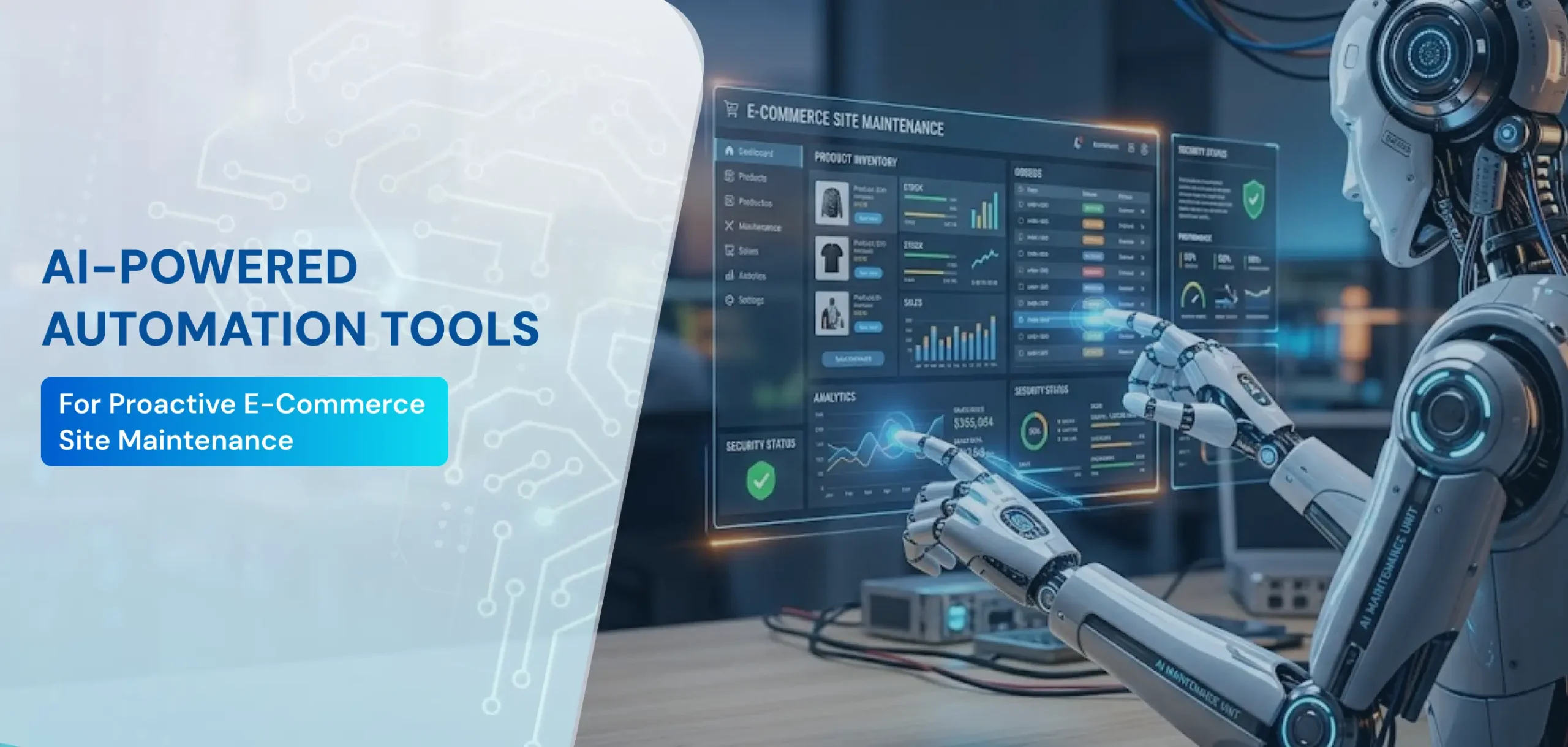
E-commerce businesses today face an unprecedented level of competition. With thousands of online stores vying for attention, website performance, security, and user experience can make or break your business. Traditional website maintenance methods—manual checks, reactive fixes, and periodic audits are no longer enough. This is where AI-powered automation tools for e-commerce site maintenance come in, offering proactive solutions to ensure your store remains secure, fast, and optimized for conversions.
In this blog, we explore how AI tools can transform e-commerce website maintenance, the benefits of automation, and practical applications for Shopify and other platforms.
Why Proactive E-commerce Site Maintenance Matters
Maintaining an e-commerce website involves more than just keeping product listings updated. Proactive maintenance ensures that your online store:
- Remains secure: Protecting customer data from malware, hacks, and unauthorized access.
- Performs optimally: Fast loading pages and smooth checkout processes reduce cart abandonment.
- Supports SEO: Search engines reward websites that are regularly updated and free of broken links.
- Enhances user experience (UX): Proper navigation, updated content, and functional forms improve engagement and sales.
Neglecting proactive maintenance can lead to lost revenue, poor search engine rankings, and a damaged brand reputation. According to BigCommerce, over 30% of abandoned carts are caused by slow website performance or technical glitches, an area AI tools can directly address.
The Role of AI in E-commerce Website Maintenance
AI-powered automation tools are changing the game in e-commerce. By leveraging machine learning and predictive analytics, these tools can monitor, detect, and resolve issues before they affect customers.
Here are the main areas where AI assists in site maintenance:
1. Proactive Security Monitoring
AI tools continuously monitor your e-commerce website for suspicious activities, unauthorized logins, and malware. Unlike traditional scanners that run periodically, AI-powered security tools analyze traffic patterns in real-time, flagging potential threats and automatically applying fixes or alerts.
Keywords: AI security tools for e-commerce, proactive website security, Shopify AI monitoring
Example Tools:
- Sucuri with AI-powered threat detection
- Cloudflare’s AI firewall for e-commerce
- SiteLock AI scanning
2. Automated Performance Optimization
Website speed directly impacts conversion rates. AI tools can automatically optimize images, compress files, and manage server resources to ensure your e-commerce store loads quickly on all devices. Machine learning algorithms analyze historical performance data and predict bottlenecks, allowing for preemptive action.
Keywords: AI site speed optimization, e-commerce performance tools, Shopify page optimization
Example Tools:
- NitroPack (AI-assisted speed optimization)
- Google Lighthouse with automated recommendations
- AI image compressors integrated with Shopify
3. SEO Audits and Optimization
Maintaining high search engine rankings is critical for attracting organic traffic. AI-powered SEO tools can automatically crawl your e-commerce website, identify broken links, detect duplicate content, and suggest keyword optimizations. Some tools even use predictive analytics to suggest content updates that will improve rankings over time.
Keywords: AI SEO tools, automated Shopify SEO, e-commerce website optimization
Example Tools:
- SEMrush with AI-driven audit reports
- Ahrefs AI integration for predictive SEO
- Moz Pro with automated keyword tracking
4. Content and Inventory Management
Keeping product listings, descriptions, and blogs up-to-date is essential for SEO and conversions. AI-powered content management tools can analyze engagement data and suggest content updates or product highlights automatically. AI can also monitor inventory levels, alerting you to restock or optimize listings for underperforming products.
Keywords: AI content management, e-commerce inventory AI, Shopify automated updates
Example Tools:
- Grammarly Business AI for content optimization
- Shopify Flow for automated inventory management
- MarketMuse AI for content planning
5. User Experience (UX) Enhancements
AI tools can track user behavior and identify friction points in the shopping journey. By analyzing click patterns, session durations, and cart abandonment, AI can automatically suggest UX improvements, layout changes, or checkout optimizations. Some AI tools can even personalize product recommendations in real-time.
Keywords: AI UX optimization, AI personalization for Shopify, e-commerce site experience improvement
Example Tools:
- Hotjar AI heatmaps
- Dynamic Yield for personalization
- Optimove predictive UX AI
Benefits of AI-Powered Proactive Maintenance
Integrating AI-powered automation tools into your e-commerce maintenance strategy brings multiple advantages:
- Reduced Downtime – AI identifies and resolves issues before they escalate, ensuring your store is always accessible.
- Improved Security – Automated threat detection minimizes risks of hacks or malware infections.
- Enhanced SEO Performance – AI audits ensure your website remains search engine-friendly, driving more organic traffic.
- Faster Page Load Times – Automated optimization improves conversions and reduces bounce rates.
- Better User Experience – Personalized recommendations, improved navigation, and proactive fixes increase customer satisfaction.
- Time and Cost Savings – Automation reduces manual monitoring and maintenance, freeing up your team to focus on growth strategies.
Implementing AI Automation Tools for Shopify
For Shopify store owners, AI-powered maintenance is particularly effective due to the platform’s scalability and app ecosystem. Here’s how to implement it effectively:
- Start with Security – Integrate AI firewalls, malware scanners, and two-factor authentication to safeguard customer data.
- Optimize Site Performance – Use AI-driven speed tools like NitroPack or Crush. pics to compress images and optimize scripts automatically.
- Automate SEO – Install AI-powered SEO apps that continuously crawl your store, suggest optimizations, and track keyword rankings.
- Streamline Inventory Updates – Use Shopify Flow and other AI inventory apps to automate product restocking alerts and price updates.
- Enhance UX – Leverage AI heatmaps, personalization engines, and session tracking to proactively adjust layouts and recommend products.
Case Study: AI-Driven Maintenance Success
Consider an online fashion retailer using AI-powered automation tools for Shopify. Before implementing AI, the store experienced frequent checkout errors, slow page loads, and abandoned carts. After deploying AI solutions:
- Site speed improved by 40%
- Cart abandonment reduced by 25%
- SEO rankings for top product categories increased by 30%
- Security incidents dropped to zero
This demonstrates the measurable impact of AI-driven proactive e-commerce site maintenance.
Future Trends in AI for E-commerce Maintenance
AI continues to evolve, offering new capabilities for e-commerce businesses:
- Predictive Analytics for Traffic Spikes – AI predicts peak shopping times and pre-adjusts server resources.
- Voice Search Optimization – AI tools optimize content for voice queries, improving discoverability.
- AI Chatbots for Customer Support – Integrated bots handle common queries, reducing support load.
- Self-Healing Websites – Emerging AI technologies can automatically fix broken scripts, database errors, or page rendering issues without manual intervention.
Tips for Choosing the Right AI Tools
- Integration Compatibility – Ensure the AI tool works with your e-commerce platform (Shopify, WooCommerce, Magento).
- Ease of Use – Choose tools with intuitive dashboards and automation features.
- Customizability – Look for AI solutions that allow you to tailor alerts, optimizations, and performance thresholds.
- Scalability – Ensure the tool can handle your store’s growth in traffic, products, and features.
- Support & Updates – Opt for tools with regular updates and reliable customer support.
Proactive e-commerce site maintenance is no longer optional in today’s competitive online marketplace. AI-powered automation tools provide a robust, intelligent, and efficient way to manage security, performance, SEO, content, and user experience. By leveraging AI for maintenance, Shopify and other e-commerce store owners can reduce downtime, improve conversions, enhance SEO, and deliver a superior customer experience.
Investing in AI tools is not just about automating repetitive tasks—it’s about ensuring your online store remains resilient, competitive, and ready for growth.
If you’re looking to implement AI-powered maintenance strategies for your e-commerce store, contact Gradient Eye Technologies to explore our Shopify development, SEO, and website maintenance services.